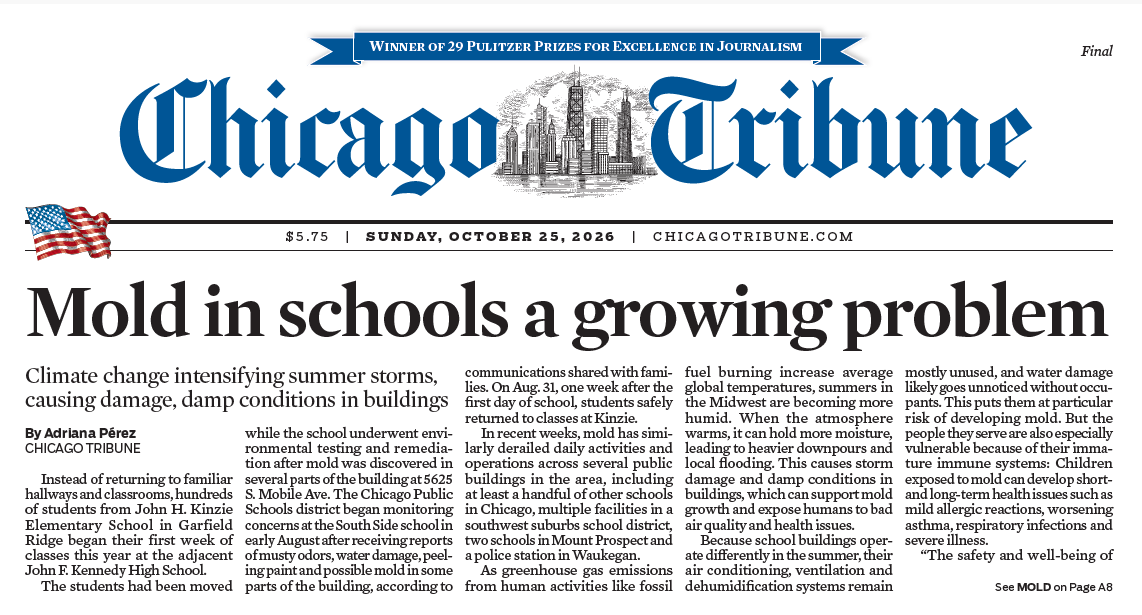
I was recently interviewed by the Chicago Tribune about an often-overlooked consequence of climate change: the growing risk of mold exposure in schools, homes, and other buildings following severe storms and flooding.
As temperatures rise, the atmosphere can hold more moisture, contributing to heavier rainfall, flooding, and prolonged damp conditions. These environments create ideal conditions for fungal growth. While mold is often viewed as a nuisance, it can have important implications for indoor air quality and human health, particularly for children, older adults, and individuals with weakened immune systems.
My research focuses on understanding how environmental fungi respond to changing conditions and how some species may adapt to warmer temperatures. Following Hurricane Helene, my team began studying fungal communities in flood-damaged environments across western North Carolina. One of the most striking observations was the incredible diversity of fungi present in these buildings. Flood-affected environments are complex ecosystems, and we still have much to learn about how fungal species interact with one another and influence human health.
As climate-related disasters become more frequent, understanding these hidden biological consequences will be increasingly important. By studying fungal ecology, adaptation, and exposure risks, we hope to generate the data needed to inform public health responses and improve resilience in communities recovering from severe weather events.